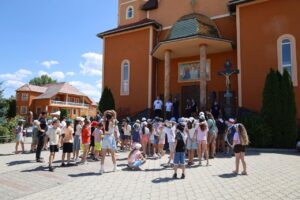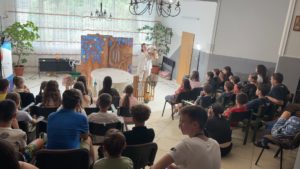

Winter poses significant challenges for birds, particularly in terms of hunger, as they struggle to find food during the cold months. Only a fraction of wintering birds—approximately three out of ten—will survive until spring, highlighting the severity of the season’s impact on their lives. Olha Velychkanych, an expert from the Interreligious and Civil Environmental Forum of Eastern Europe (IRCEF), led an eco-activity titled “Let’s Help Our Feathered Friends in Winter” for students at the Uzhhorod private lyceum “TheoBand” to learn about which bird species stay in our region during the winter, where they can be found, and how to help them. Through a multimedia presentation, young conservationists solved bird-related riddles, reinforced their knowledge of bird appearances, and shared observations about feeders. The teacher highlighted various ways in which certain bird species prepare for winter. For instance, nuthatches and jays prepare for winter by storing food in tree bark cracks, emphasizing the need for human assistance during frosty snowy winters. However, in winter, they may only recover a portion of these reserves, constantly inspecting trees in search of food. Therefore, all birds require assistance during frosty snowy winters, just as we rely on them during the summer. Birds, particularly great tits, serve as crucial allies in pest control, consuming as many insects in a day as their weight! Here are some intriguing statistics:
– A single feeder can save fifty great tits from starvation.
– One great tit can conserve ten trees from pests.
– A family of great tits eliminates over four thousand caterpillars during the summer!
After getting a better grasp of birds’ roles in nature and human life, the children took part in activities such as solving anagrams on wintering bird species in our area, making and analyzing proverbs, and recalling the fascinating features of certain birds. Finally, they colored birds and adorned a painted tree with feeders, symbolizing their commitment to supporting birds during the harsh winter months.


The event was held within the framework of cooperation between the Interreligious and Civil Environmental Forum of Eastern Europe (IRCEF) headed by Olexander Bokotey) and the German Nature Conservation Union (NABU Bundesverband, NABU International), project coordinators Ivan Tymofeiev (NABU), and Nataliya Kulya (IRCEF).
Olha Velychkanych,
Head of the Biology Department, Transcarpathian Regional Center for Children and Youth Creativity “PADIUN” and IRCEF expert