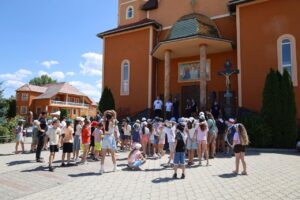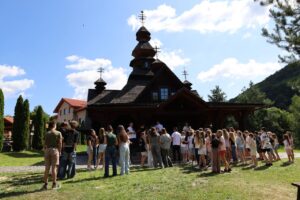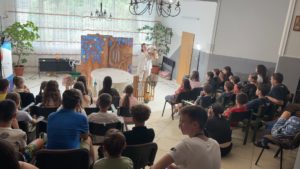
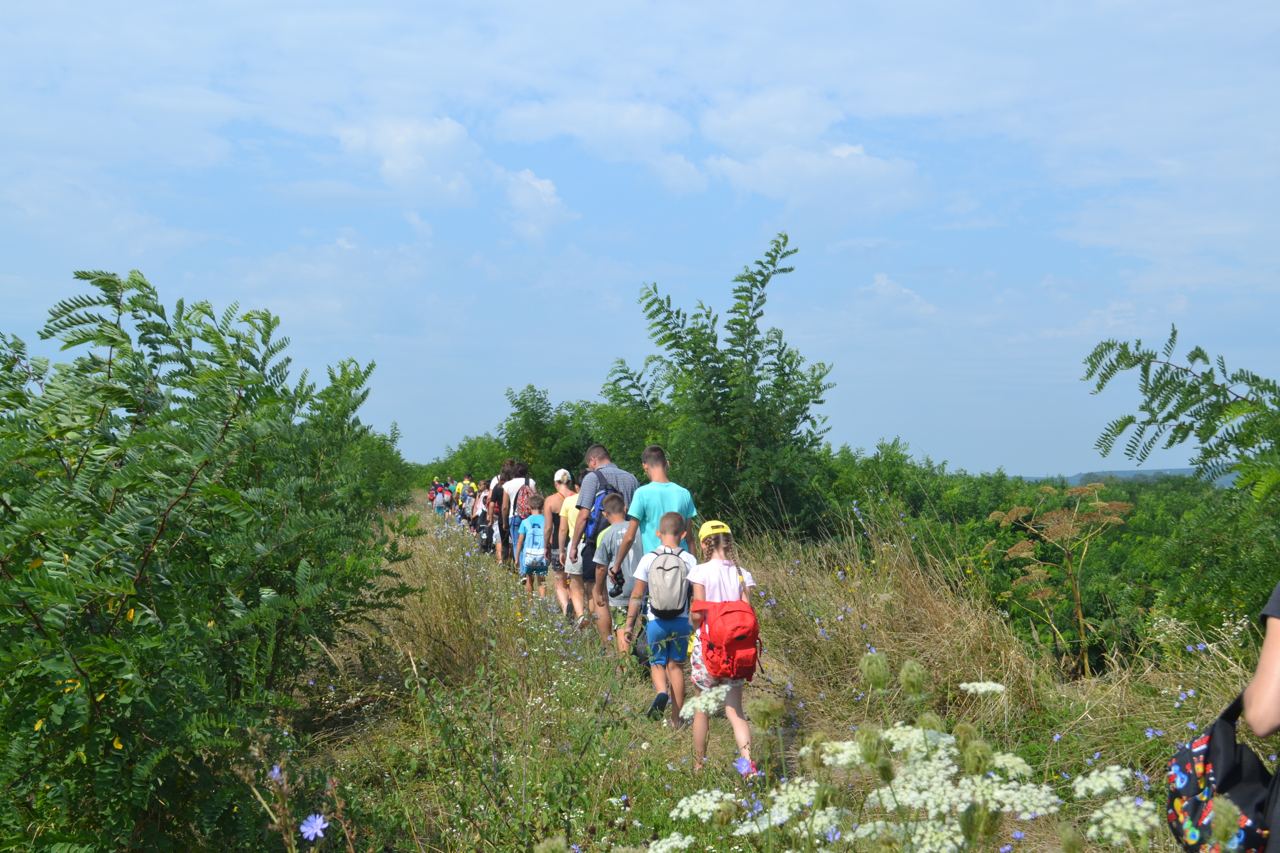
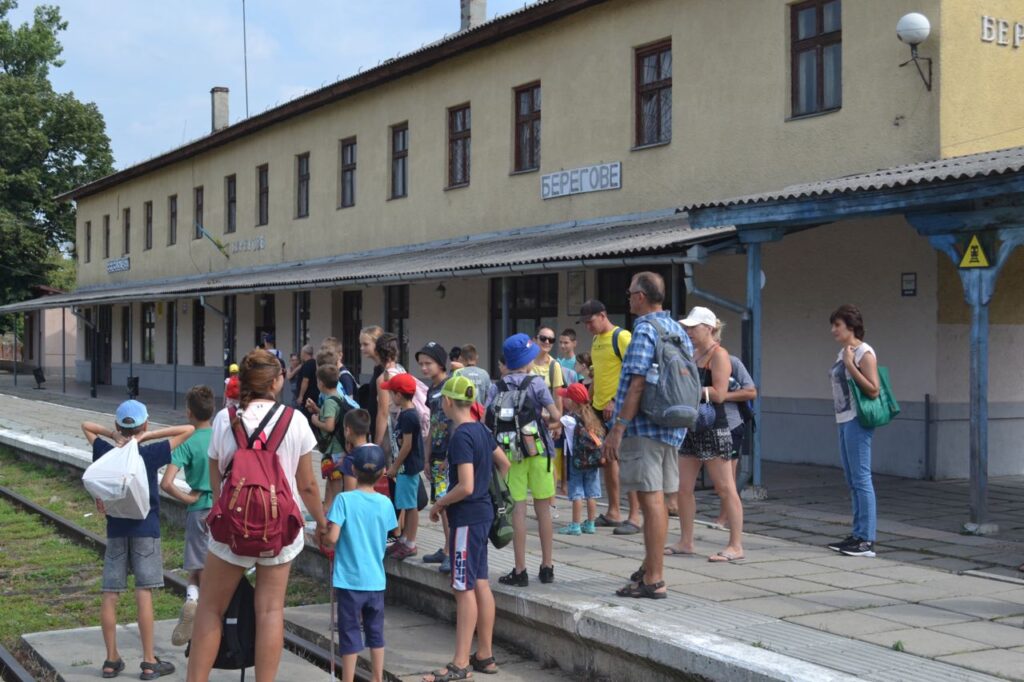
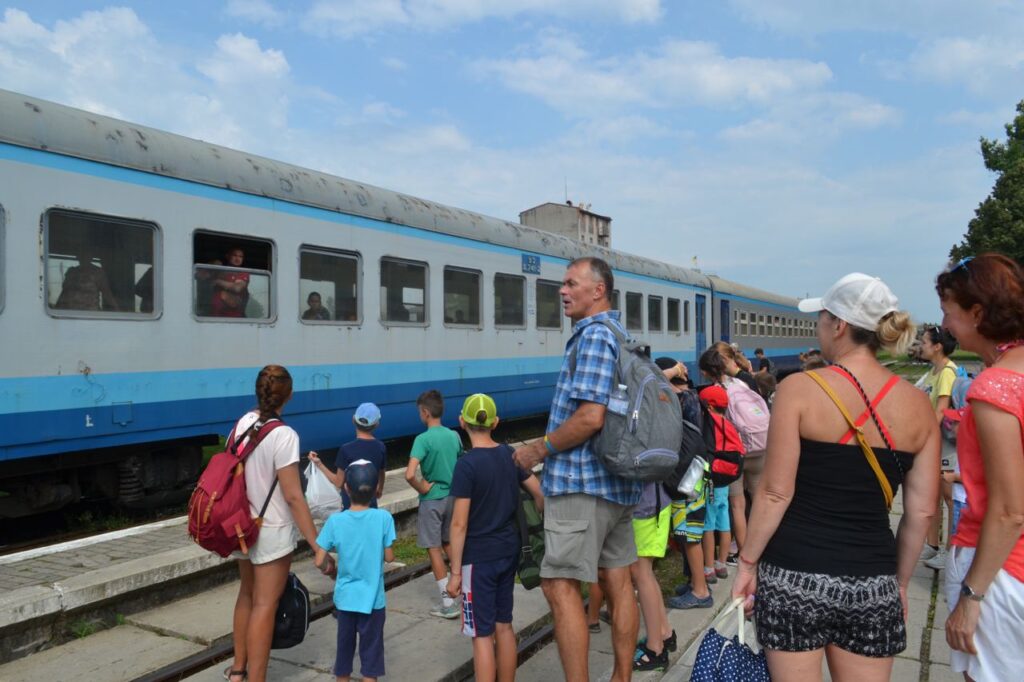
Leonid Pokrytyuk, an expert of the Interreligious and Civil Environmental Forum for Eastern Europe (IRCEF), a volunteer of the “Everyone Can Help” volunteer center, and environmental activist, Volodymyr Petrushko organized a local lore hike to the Borzhava River for children to broaden their environmental knowledge. The vacation comprised relaxation on clean local waters and training in which participants examined the flora and fauna of the district. The journey began at the Berehovo railway station, where the participants boarded a train to cover part of the long journey.
The first stop on the journey was the headwaters of the Borzhava River, where the Verke Canal begins. The children spent a long time admiring the streams and discovering a significant difference between the type of water that runs into the canal and the water that flows through the city of Berehovo. The clean and cool water drew everyone in, so everyone decided to swim and sunbathe on the bank.
The students learned how to spot birds. The children were given professional binoculars from IERS by Leonid Pokrytyuk, a leading ornithologist of Transcarpathia, and he told them about the most striking birds of Ukraine: the European bee-eater (Merops apiaster); the Eurasian hoopoe (Upupa epops); the common kingfisher (Alcedo atthis); and the European roller (Coracias garrulus). Children and adults were shocked to see these birds because such vibrant colors were usually associated with tropical bird species. The entomological study was devoted to learning about Orthoptera, a family of insects whose most well-known members are grasshoppers, crickets, and locusts. Because of their unique jumping hind legs, they are also known as Holarctic shore bugs (Saltatoria).
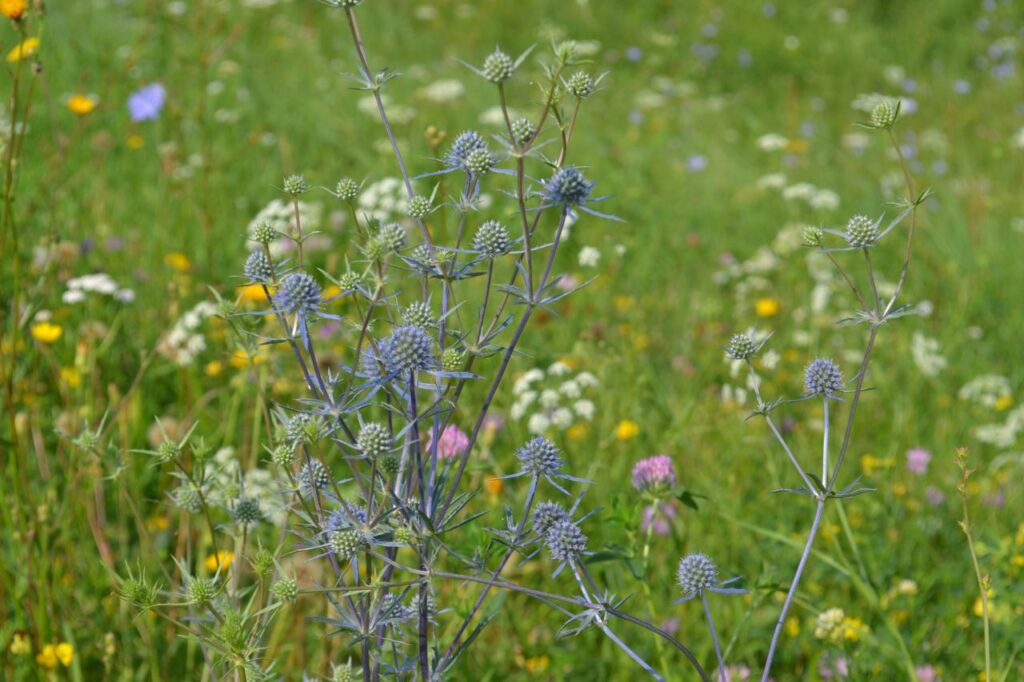
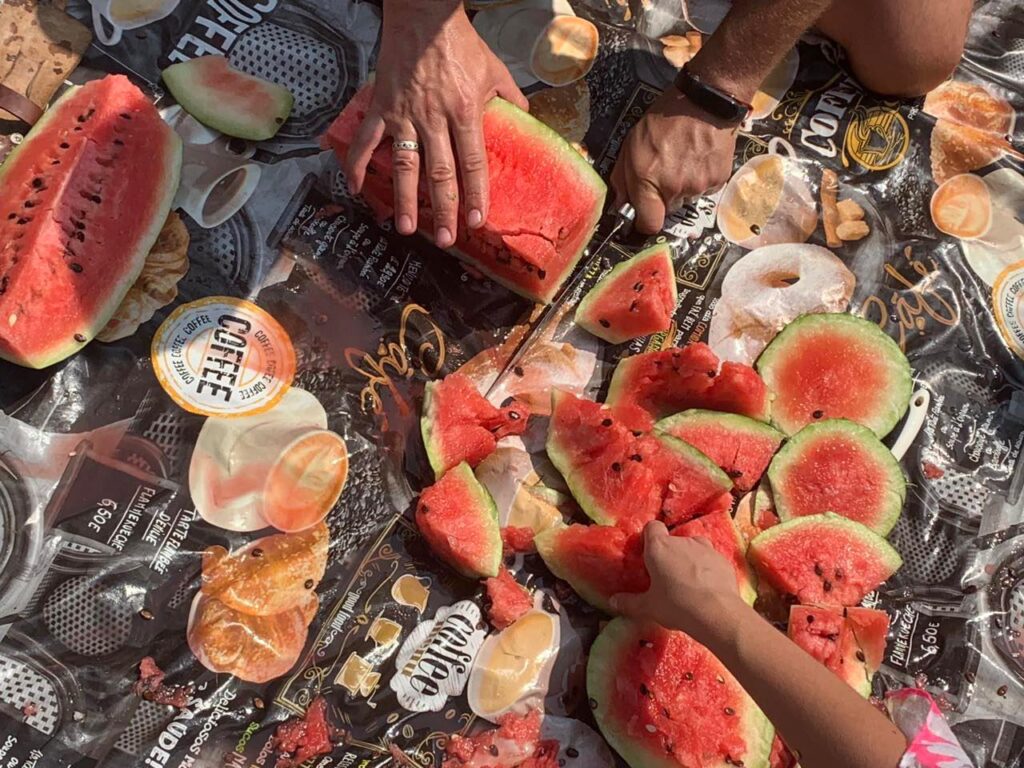
They were hunting for edible and medicinal wild herbs and bushes while studying the region’s greenery. The discovery of a vast area of the medicinal herb Sanguisorba officinalis L., which helps bruises and wounds heal faster, was the most notable. In medicine, it is used as an astringent and hemostatic treatment for internal bleeding. In addition, the plant’s leaves and roots are used to make salads, soups, and hot and cold drinks. Another interesting activity was the tasting of local watermelons, which the children were introduced to by farmer Poli Horvat, who told them about his farm.
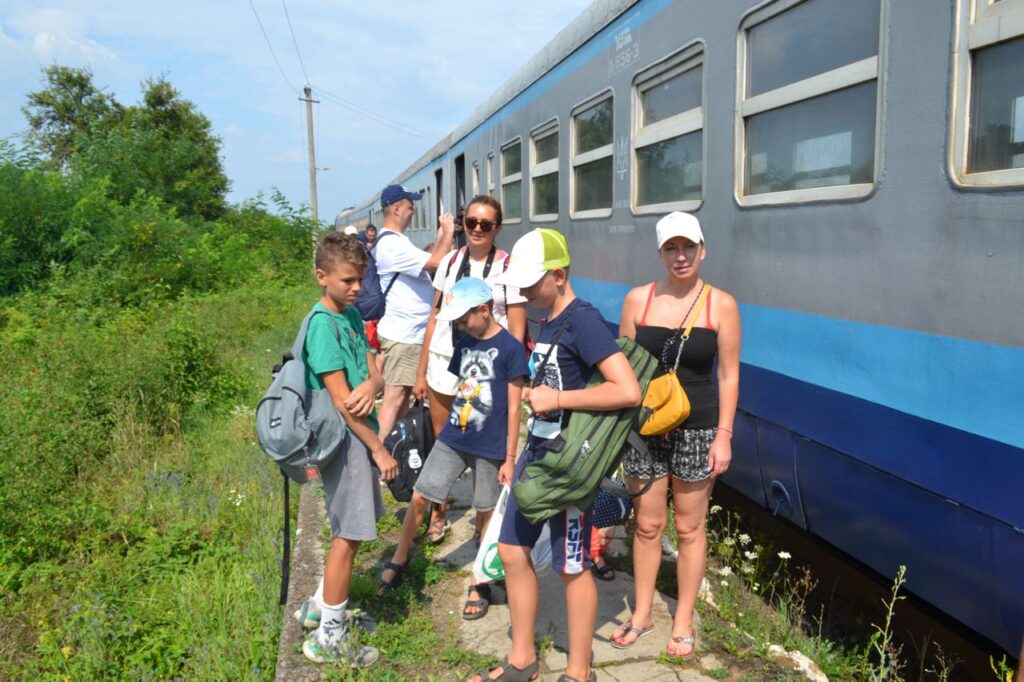
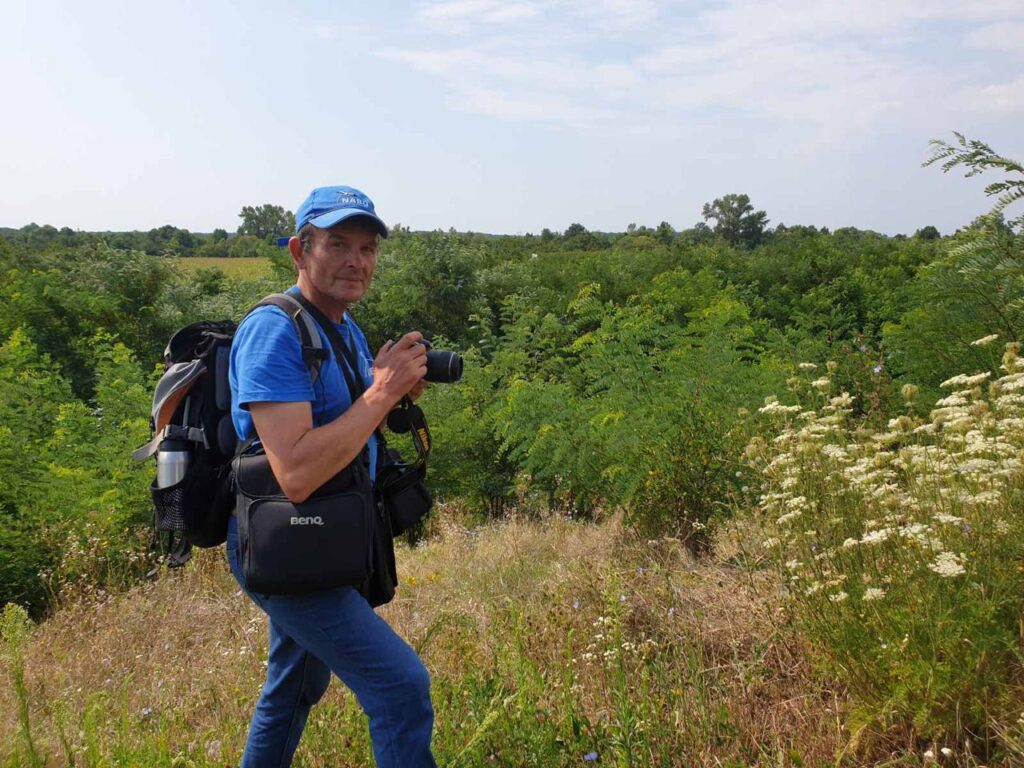
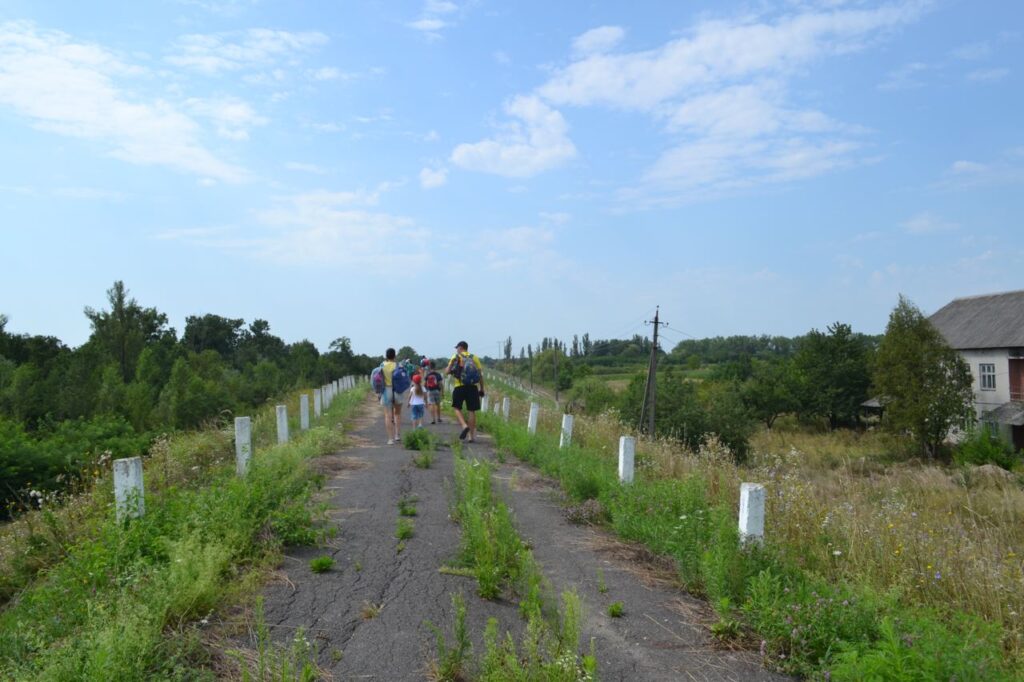

The event was held with the participation of IDP children in the framework of cooperation between the Interreligious and Environmental Civil Forum of Eastern Europe (IRCEF) (headed by Olexander Bokotey) and the “Everyone Can Help” Volunteer Center with the German Nature Conservation Union (NABU Bundesverband, NABU International), project coordinators Ivan Tymofeiev (NABU), Nataliya Kulya (IRCEF).
Informational Service of IRCEF