Learning to love and understand the forest is a fundamental aspect of appreciating the interconnectedness of humans and nature. It’s crucial to educate ourselves about nature, comprehend its significance, and actively work to protect and restore it.
The teachers at the “PADIUN” center and IERS eco-experts have set a goal to impart knowledge about forests to children, helping them comprehend the diverse significance of nature, particularly forests, for both society and each individual. Their aim is to develop an appreciation for nature and nurture a desire in children to actively contribute to environmental improvement.
Forest pedagogy proves to be an effective tool for enabling children to grasp the significance of forests, and the necessity for their sustainable use, protection, and restoration. It also helps them understand the impacts of climate change on forests.
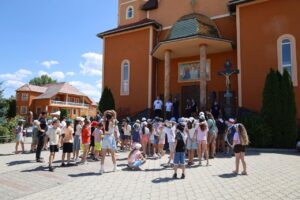
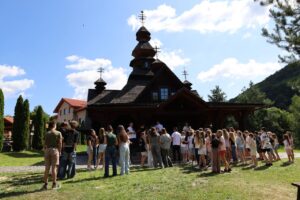
Continuing their exploration of forest biodiversity, the ecology field practice participants, under the guidance of Olha Velychkanych, Head of the PADIUN Biology Department and IERS expert, embarked on an excursion to a forest near Nevytsky Castle. Their first point of study was a geological natural monument of local importance in Ukraine, showcasing a 10-meter-high column of volcanic tuff—a relic of our region’s volcanic past.
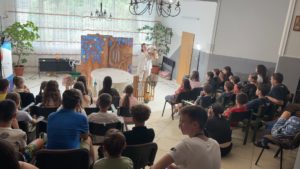
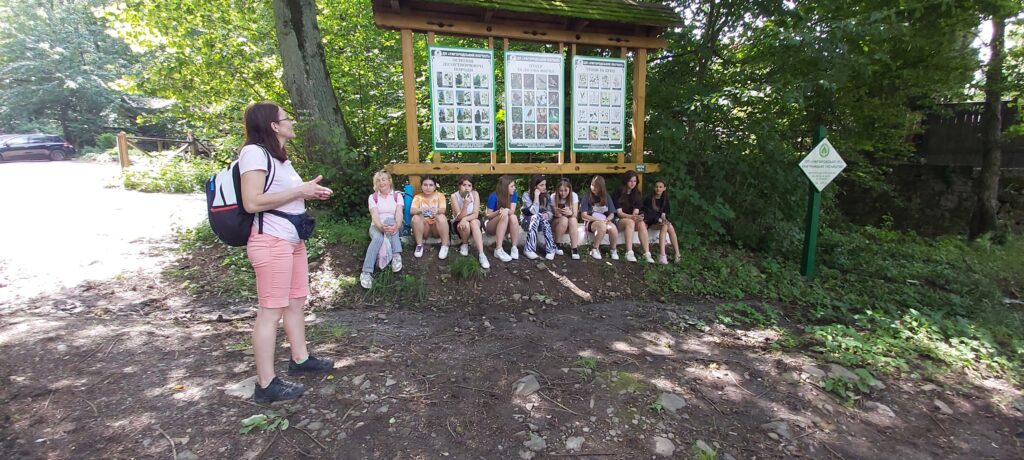
Prior to delving into the forest to uncover its secrets, the tour participants familiarized themselves with the information stand provided by the Kamianytsia Forestry of the Uzhhorod Forestry State Enterprise. This stand outlined the main forest-forming species, grasses, and shrubs of the forest, as well as its avian and general fauna.
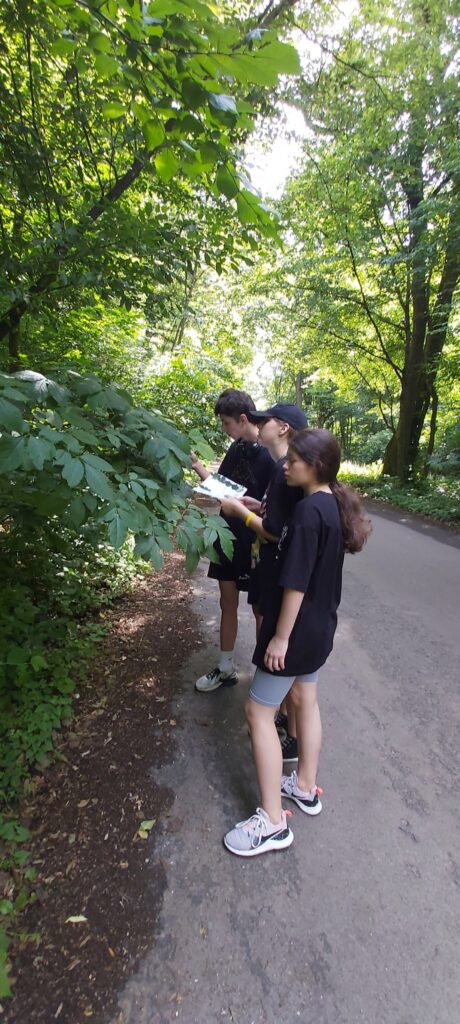
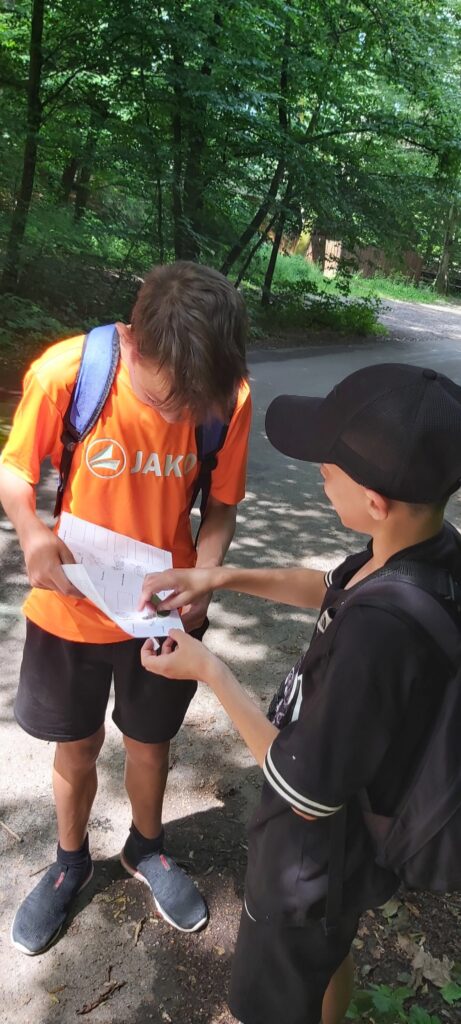
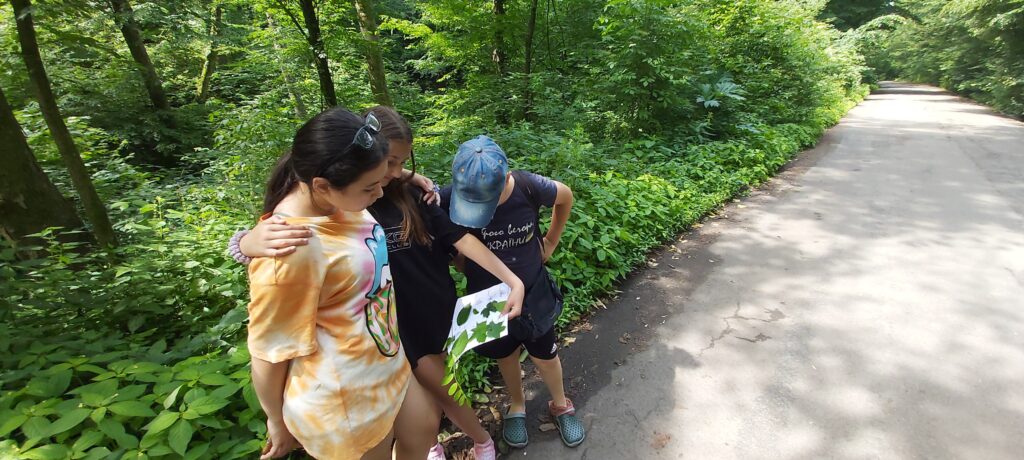
An essential aspect of nature-based learning is the hands-on experience children gain in the forest, approached in a playful manner. Each team was given a task: on their way to Nevytsky Castle, they had to acquaint themselves with the species of forest trees and fill in didactic cards with corresponding tree leaves. Later, they would present their completed tasks and collectively analyze any mistakes made.
The young naturalists continued their exploration, studying geological features, as well as the fauna and flora of the forest, including those listed in the Red Book. Knowledge acquired about medicinal plants was later reinforced using a set of didactic games titled “Learning about Flora and Fauna through Play”. During their observations, the children engaged all their senses:
- Sight: noting and comparing shapes, colors, and structures, and collecting natural materials.
- Hearing: recognizing and identifying the forest sounds, attempting to imitate them.
- Smell: distinguishing between different scents and their origins.
- Touch: recognizing shapes and properties of tree bark, moss, fruits, and cones.
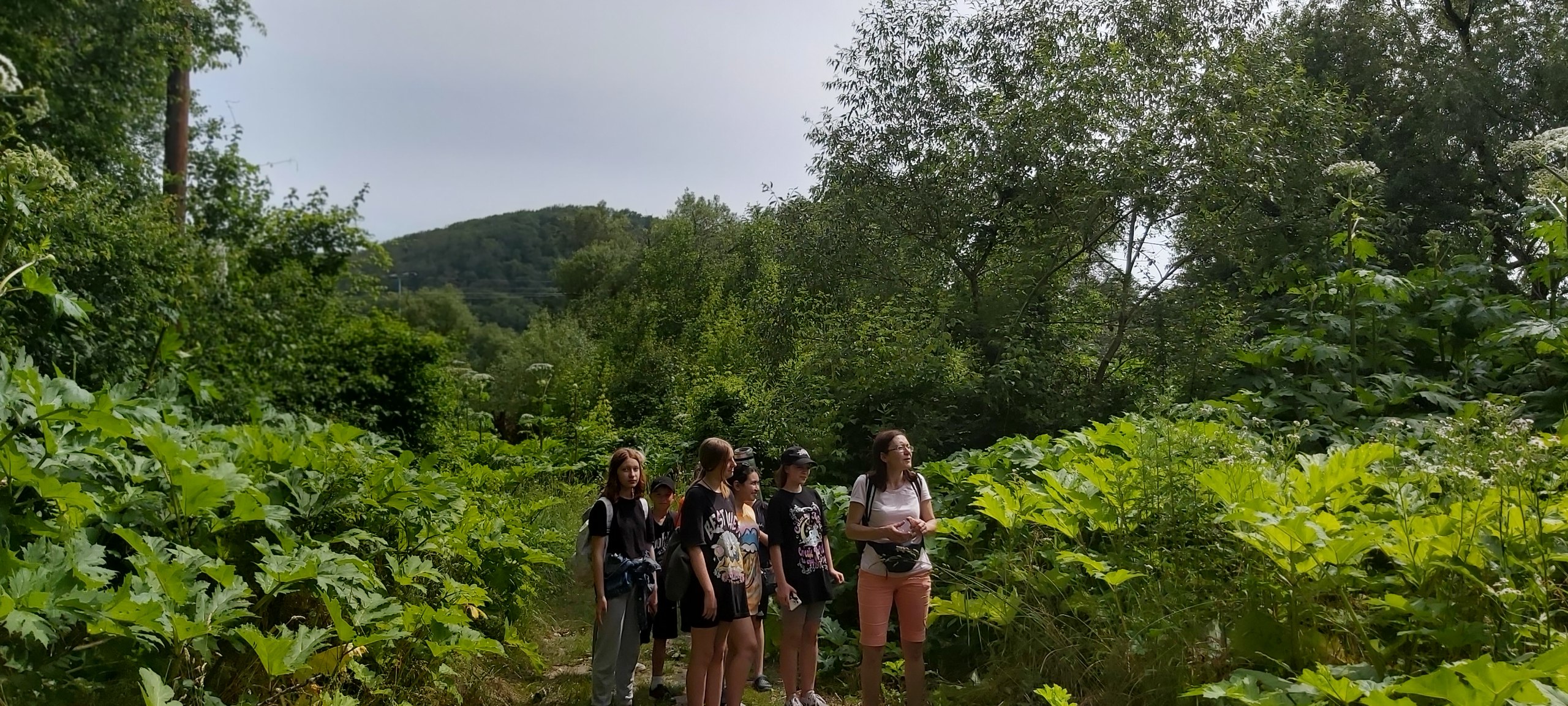
In the spirit of true conservationists, all the findings were meticulously recorded using their phone cameras, aiming to gather more detailed information and share these discoveries with friends later on. Along the banks of the Uzh River, as in previous years, attention was drawn to a hazardous invasive plant: hogweed, which displaces local flora and causes chemical burns on the skin.
The experts firmly believe that children should be educated from a young age to comprehend the diversity of nature and its significance for society as a whole and for each individual. Instilling a love for nature and creating an appealing image of it is fundamental to fostering a positive societal attitude toward the environment.




The event was held as part of the cooperation of the Interreligious and Civil Environmental Forum of Eastern Europe (IRCEF) headed by Olexander Bokotey) and the German Nature Conservation Union (NABU Bundesverband, NABU International), project coordinators Ivan Tymofeiev (NABU), and Nataliya Kulya (IRCEF).
Olha Velychkanych
IRCEF Expert and Head of the Biology Department at PADIUN