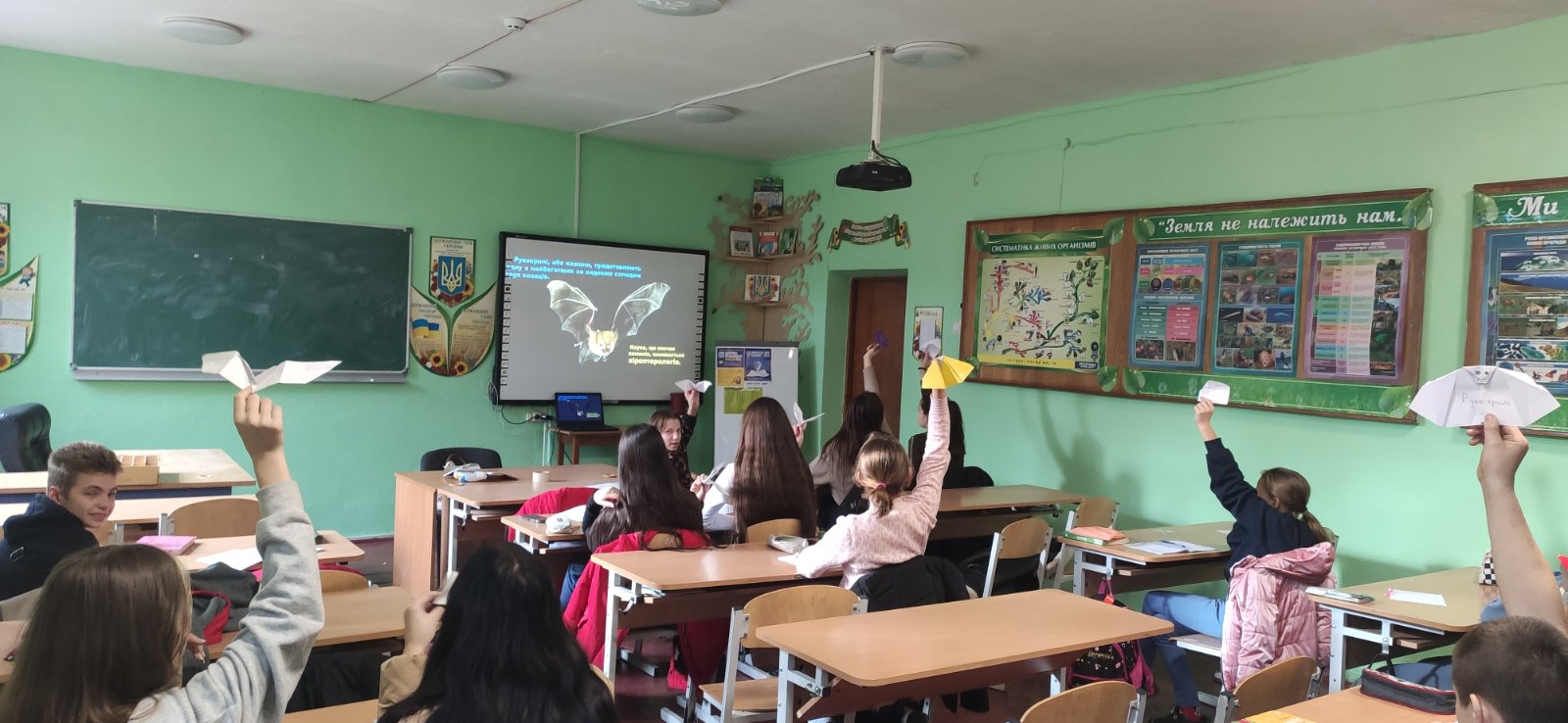
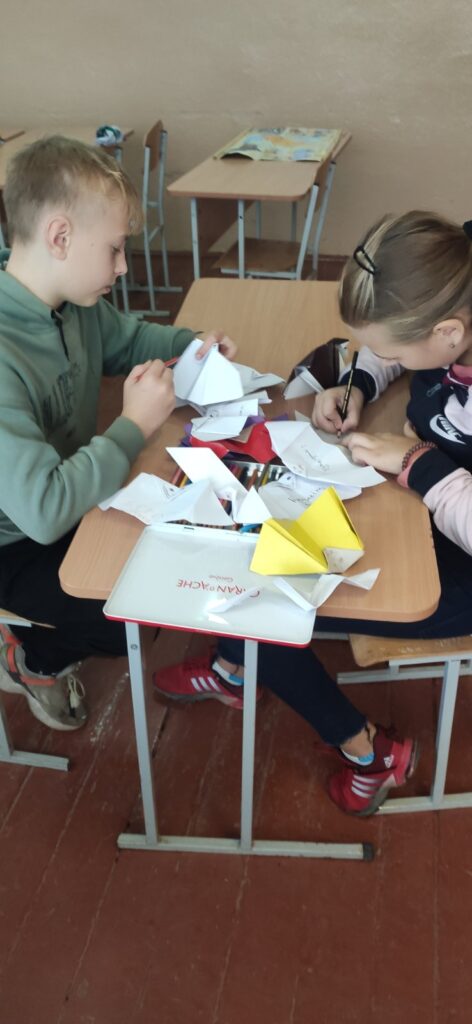
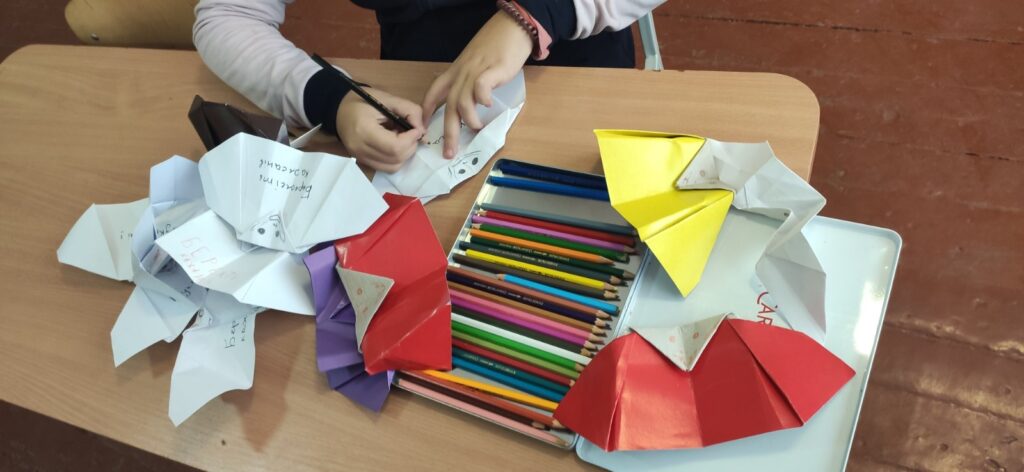
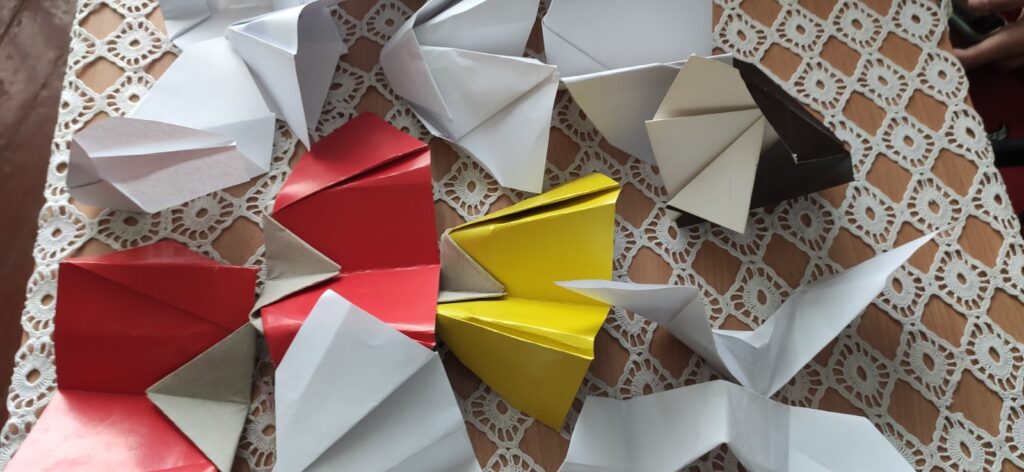
As Bat Week came to a conclusion at Turya-Remetivskyi Secondary School, 8th-grade students engaged in an artistic endeavor with biology teacher Orysia Krechko, creating bat-shaped crafts. Students created a one-of-a-kind art creation using paper and cardboard collected sustainably through trash sorting techniques in the classroom.
The students opted to use the ancient Japanese technique of origami to turn their chosen materials into three-dimensional bat forms after their teacher instructed them to choose the most untouched sheets from the paper waste materials. They began by cutting squares from their chosen sheets, which served as a useful starting point for the difficult folding procedure.
Orysia Krechko presented the history and significance of origami to students at the same time. She described how many generations of Japanese people had contributed to this art form by teaching others how to fold flat sheets of paper. The skill of folding origami was regarded as a mark of education in Japanese society, and it was believed that making a wish while folding origami might bring it to life.
This historical context enthralled the youngsters, who not only engaged themselves in the art of origami but also took advantage of the chance to personalize their creations. In addition to making bat-shaped origami, the children included signatures asking for the preservation of bats. They expected that the wishes etched on their crafts would come true, creating a peaceful coexistence between bats and people.

The event was held within the framework of cooperation between the Interreligious and Civil Environmental Forum of Eastern Europe (IRCEF) headed by Olexander Bokotey) and the German Nature Conservation Union (NABU Bundesverband, NABU International), project coordinators Ivan Tymofeiev (NABU), and Nataliya Kulya (IRCEF).
Informational Service of IRCEF