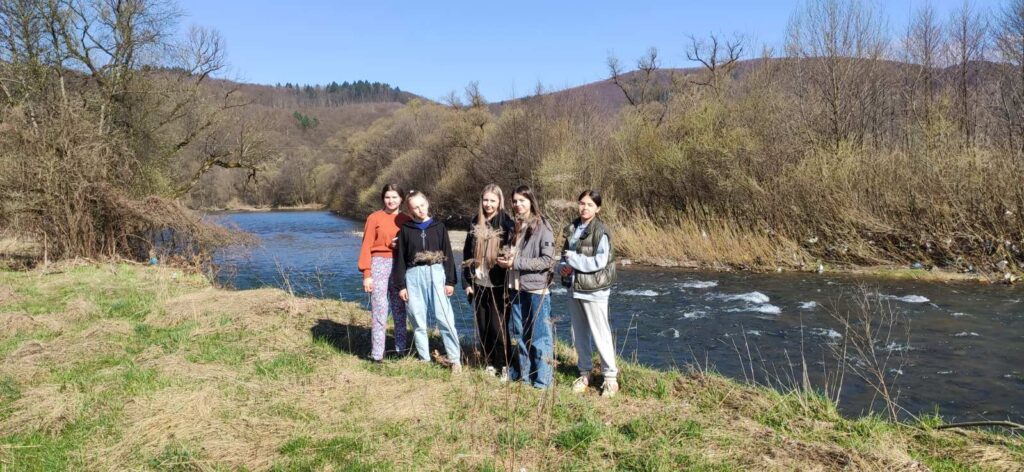
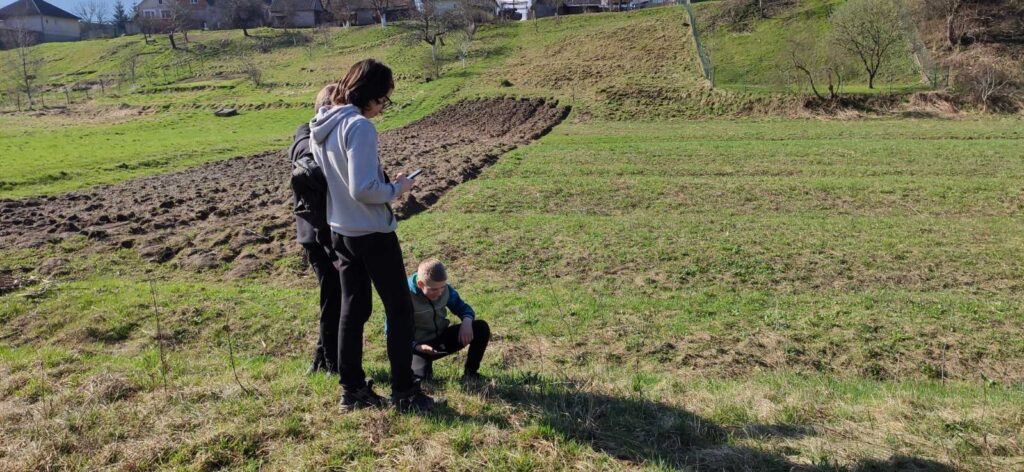
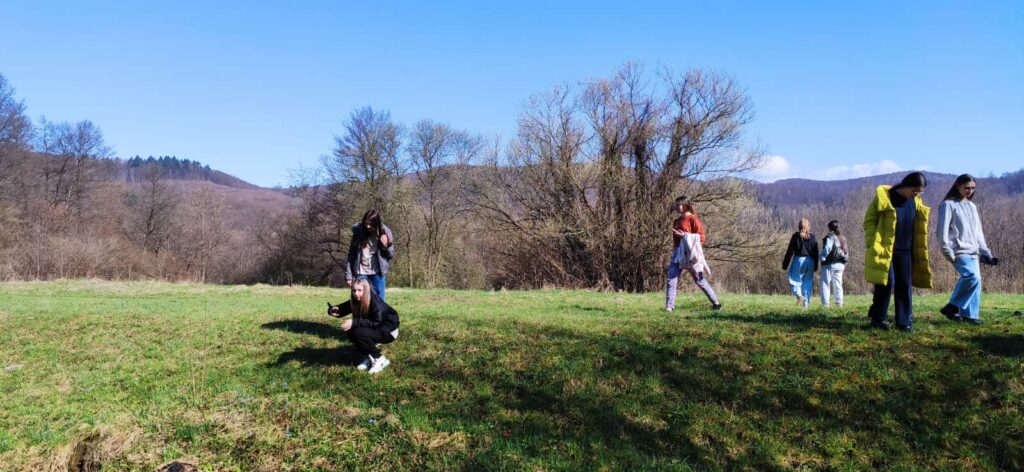
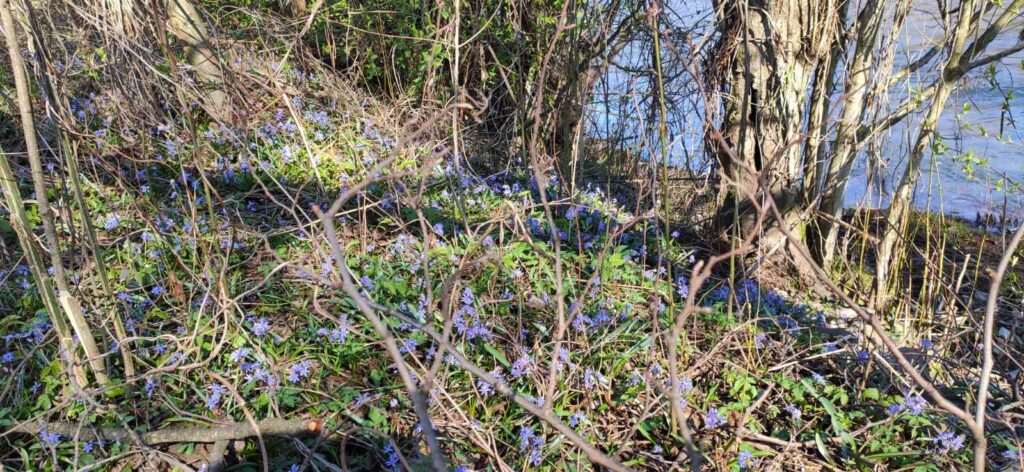
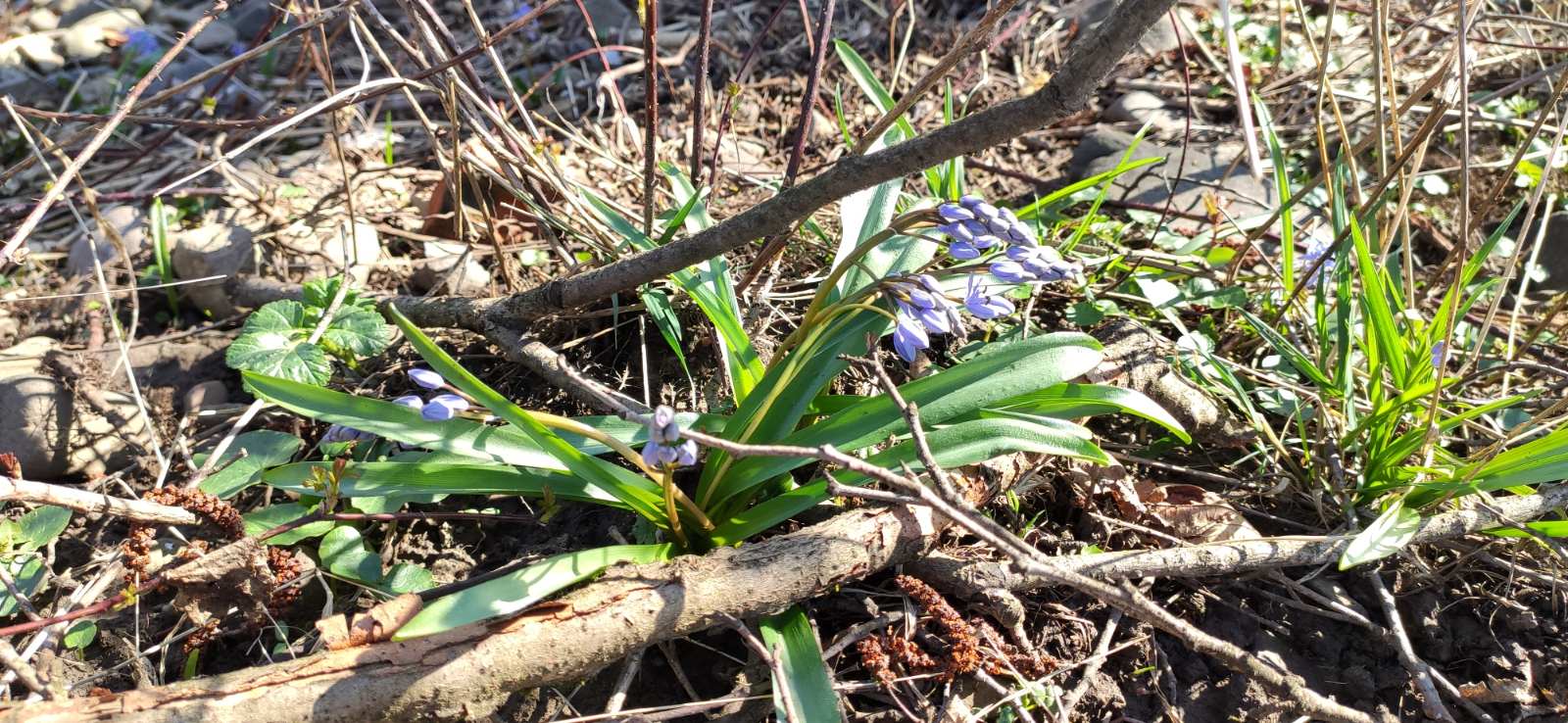
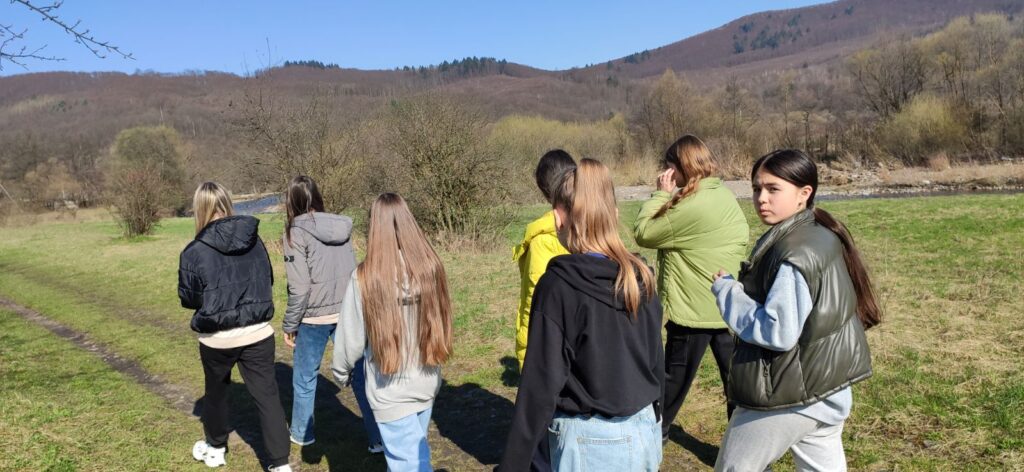
The exploration of primrose biodiversity in the village surroundings continues for students of Turye-Remety Secondary School, guided by biology teacher and IRCEF eco-activist Orysia Krechko. In an educational outdoor lesson for 9th-grade students, the group set out near the school in search of primroses. Thinking back to a past trip where they couldn’t find any snowdrops, the senior school students went to a different area this time, hoping to discover these fragile flowers. Their persistence paid off as they discovered a population of snowdrops, albeit with visible signs of negative anthropogenic impact. Along the way, the students also encountered wood anemones, marsh-marigolds, violets, and two-leaf squills. The students found a white snowdrop (Bifolia alba) which was a species they were unfamiliar with, as they had only seen two-leaf squills (Scilla bifolia) before.
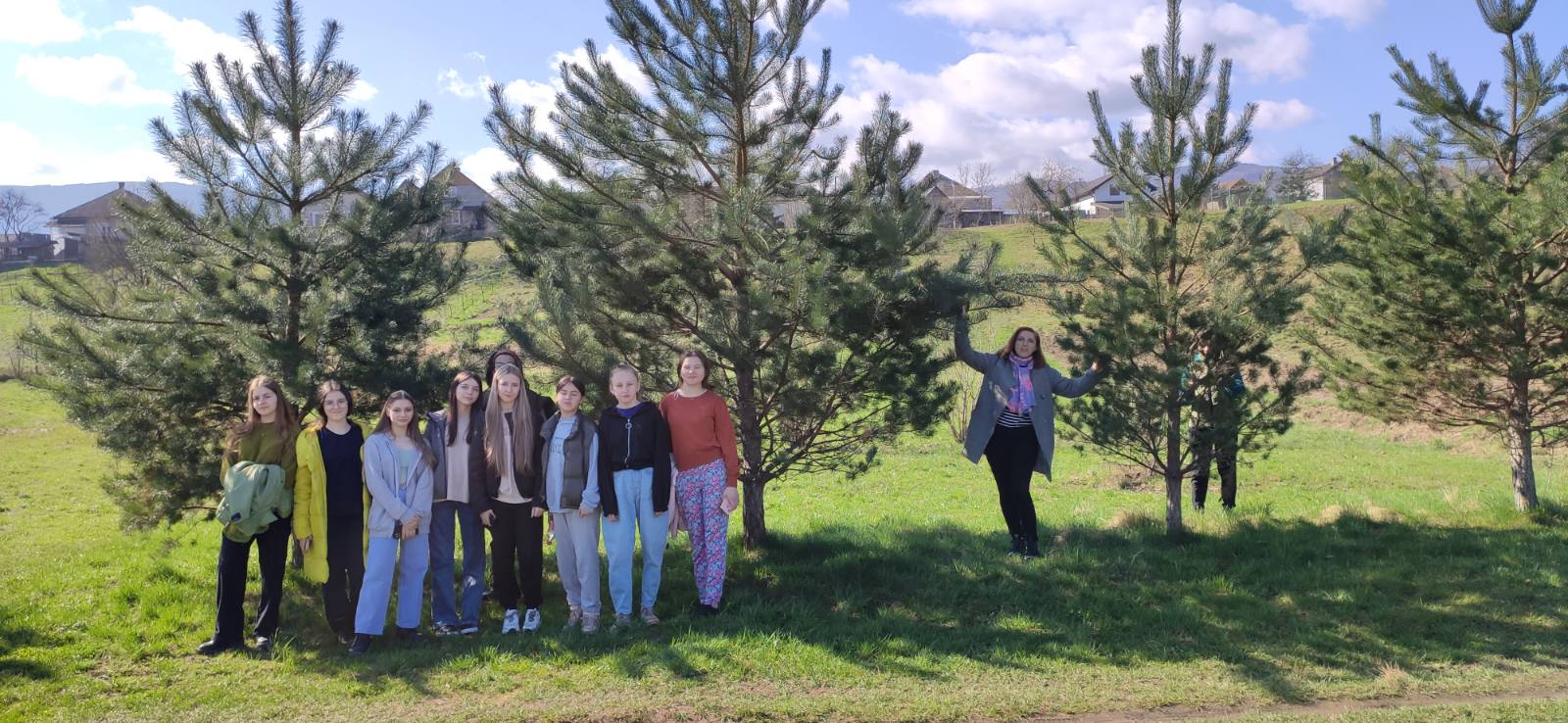
The students took pictures of the beautiful primroses on their phones to remember them later. A photo session near the pine trees, previously chosen by the students, added to the memorable experience. Beyond studying the first spring flowers, the students engaged in active discussions on the profound connection between humans and nature. The teenagers all agreed that nature plays an irreplaceable role in human existence as they shared their thoughts and perspectives on the environment. Despite advancements in technology, they recognized the essential need to protect and preserve the natural world, underscoring its significance in sustaining life and well-being.




The event was held within the framework of cooperation between the Interreligious and Civil Environmental Forum of Eastern Europe (IRCEF) headed by Olexander Bokotey) and the German Nature Conservation Union (NABU Bundesverband, NABU International), project coordinators Ivan Tymofeiev (NABU), and Nataliya Kulya (IRCEF).
Informational Service of IRCEF