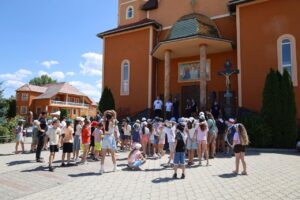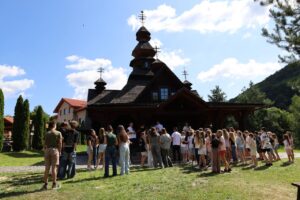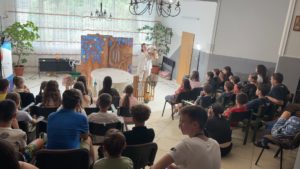

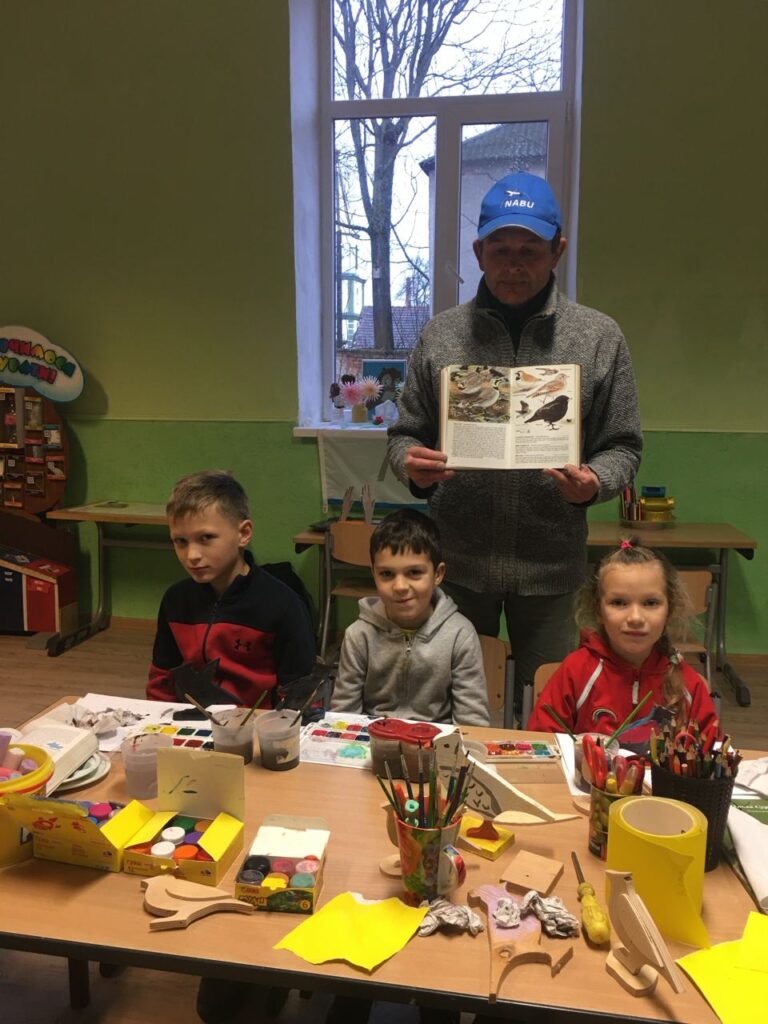
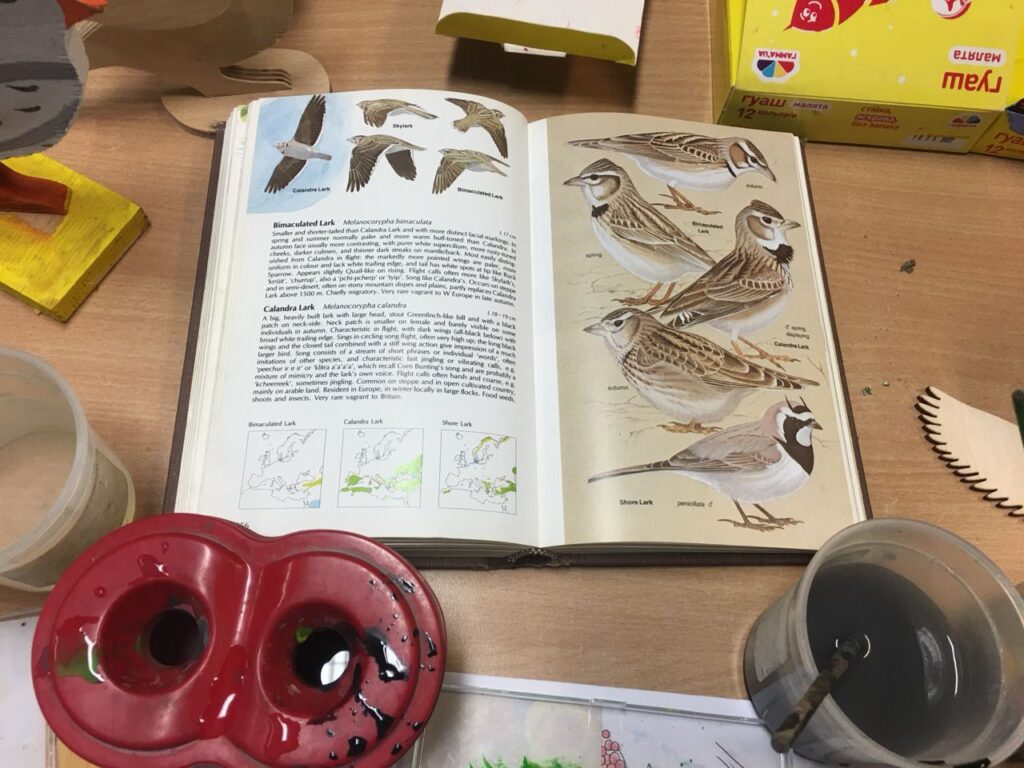
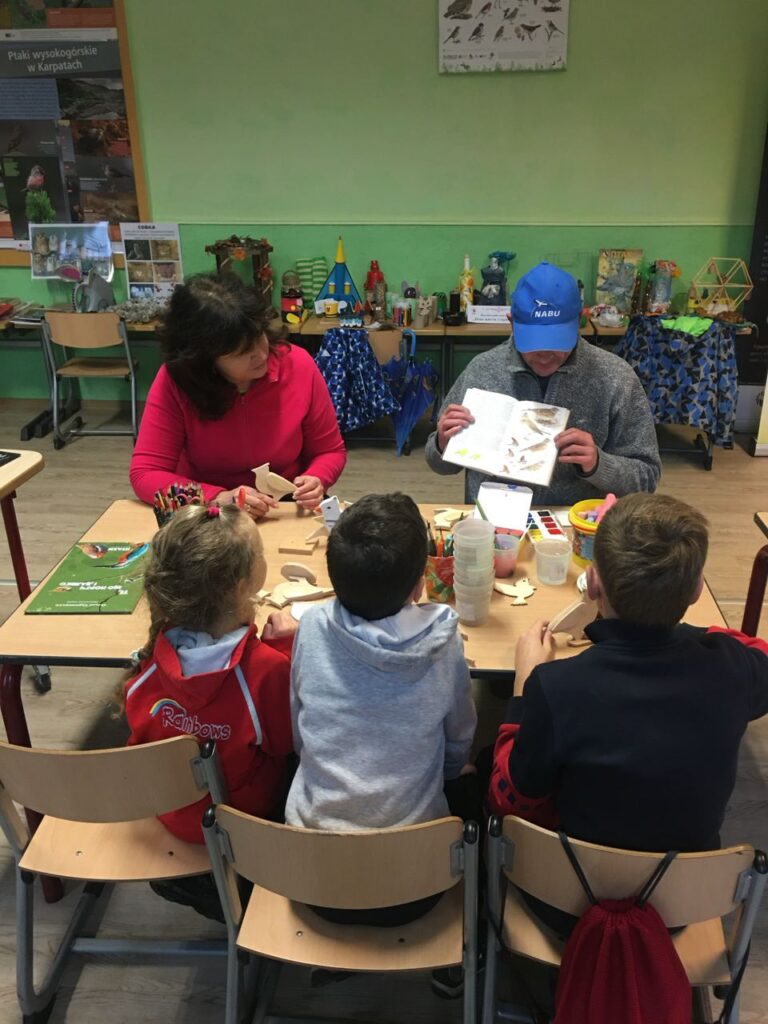
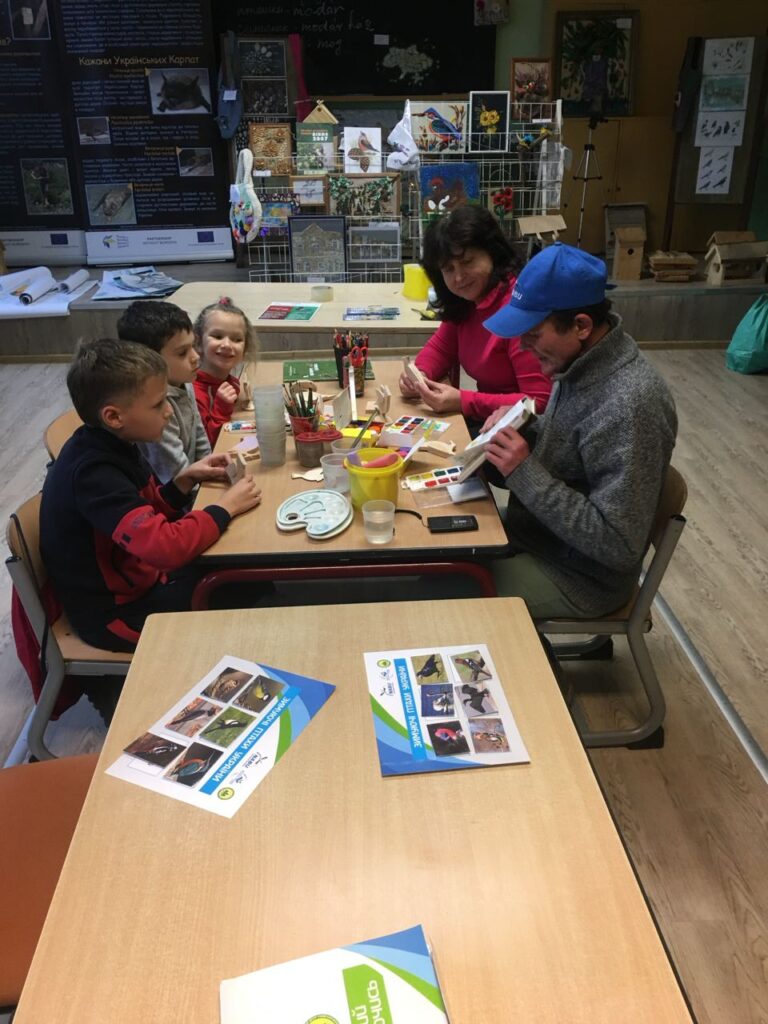
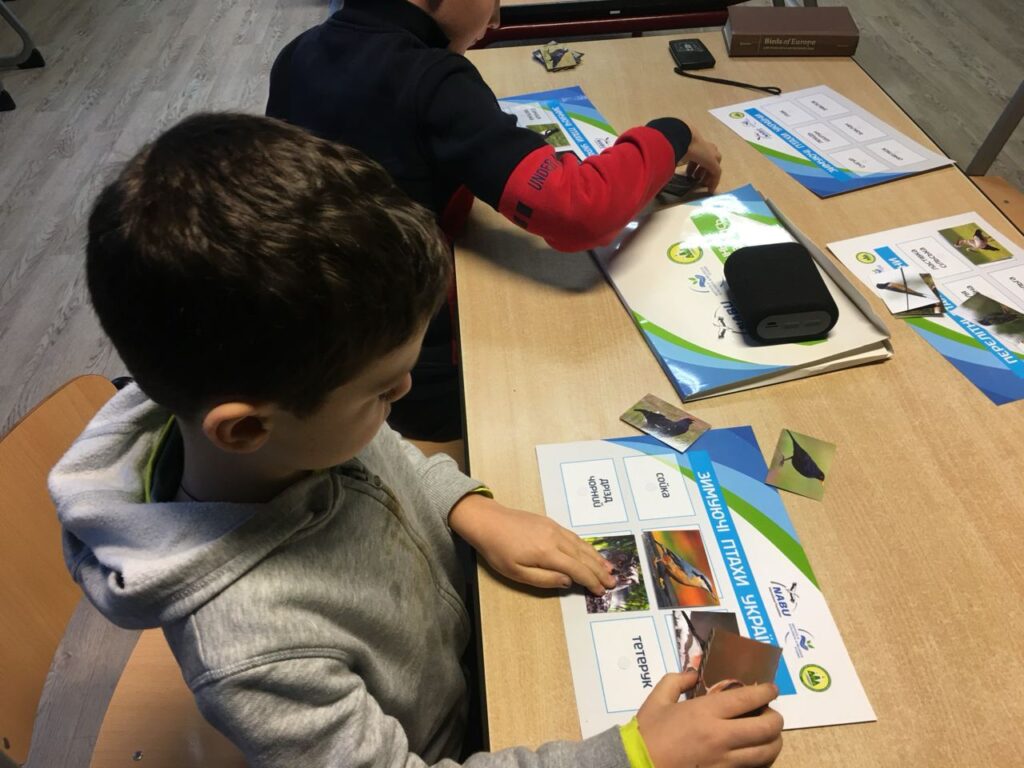
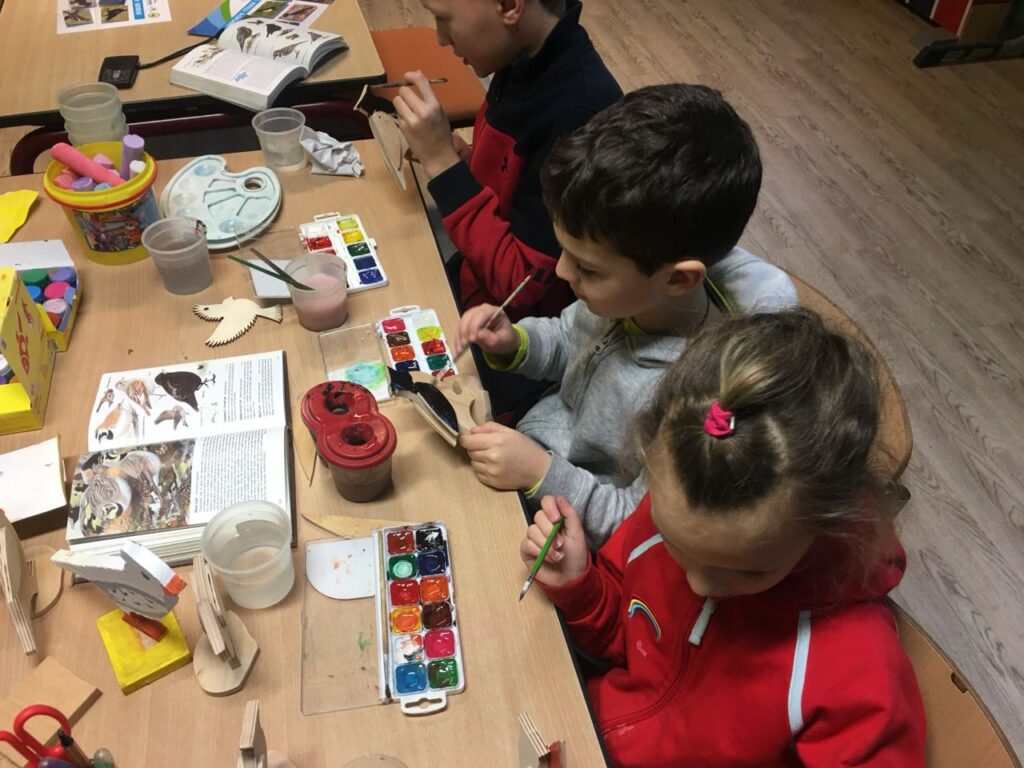
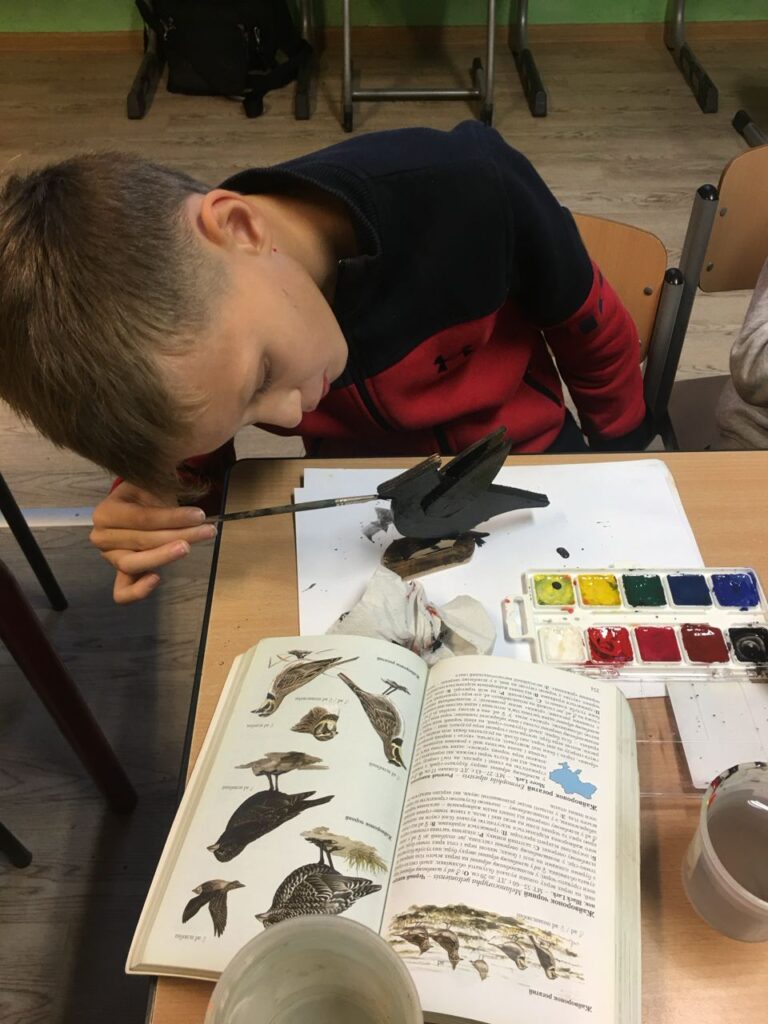
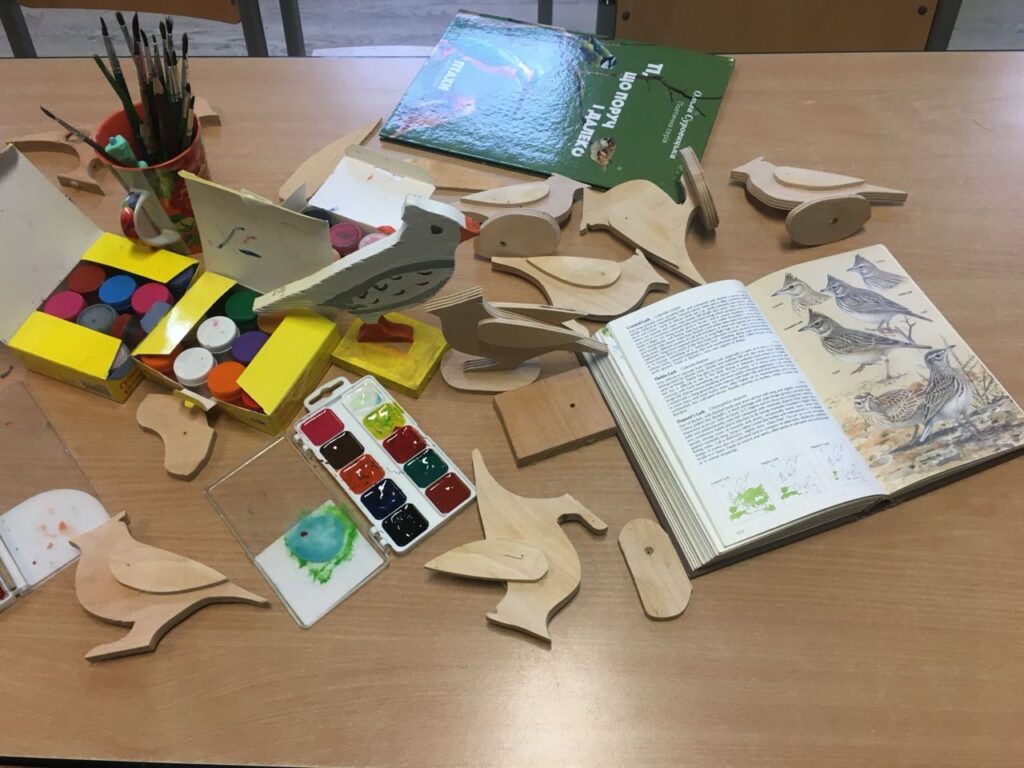
Volunteers of the Berehovo Volunteer Center “Everyone Can Help” organized an eco-educational and creative session to familiarize participants with lark species. The children were informed about the diverse lark species in Ukraine, learning distinctive features that aid in their identification in the wild. The artistic segment of the session involved crafting wooden figures representing these birds.
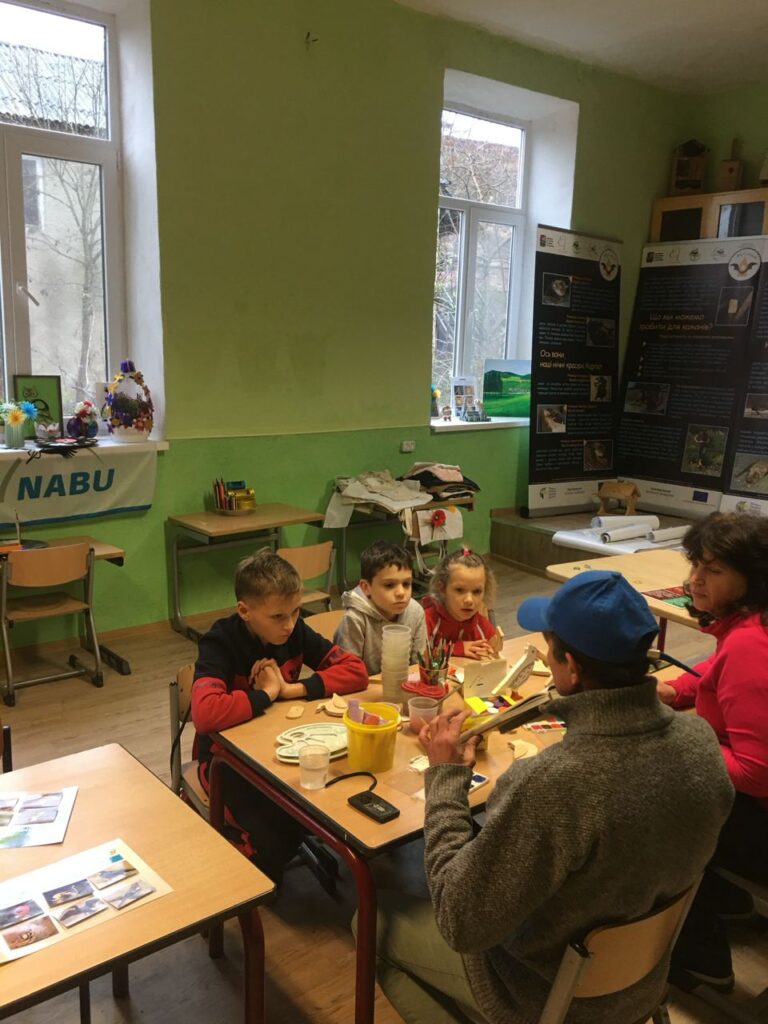
This activity unfolded at a new eco-center established under the project “Youth School of Sustainable Development of the Carpathians: Biodiversity Conservation of Church Towers,” a collaboration between the Institute of Ecological and Religious Studies-IERS and the German Nature Conservation Union (NABU Bundesverband, NABU International). Throughout the class, the classroom echoed with the sounds of birds, as sound-reproducing devices demonstrated how to recognize larks by their vocalizations. Leonid Pokrytyuk, an expert ornithologist at the Interreligious and Civil Nature Conservation Forum of Eastern Europe, informed the students that Transcarpathia hosts several lark species during the nesting season: “The Eurasian skylark (Alauda arvensis) thrives in flat and hilly plains, grassed pastures, wetlands, and even wet meadows. The woodlark (Lullula arborea) is found in fair, sparse forests (mainly in pine forests), forest edges, and overgrown clearings. The crested lark (Galerida cristata) inhabits the outskirts of settlements, roads, and pastures.”
The ornithologist also informed the students about several lark species found in Transcarpathia during the nesting season. He highlighted that these larks are protected by the Bern Convention and the EU Directive on the Protection of Wild Birds. The number of larks in most of Europe is declining due to various factors, including agricultural intensification, pesticide use, improper land use, abandonment of fallow land and dry meadows, and overgrowth of dry pastures with dense grass and shrubs.
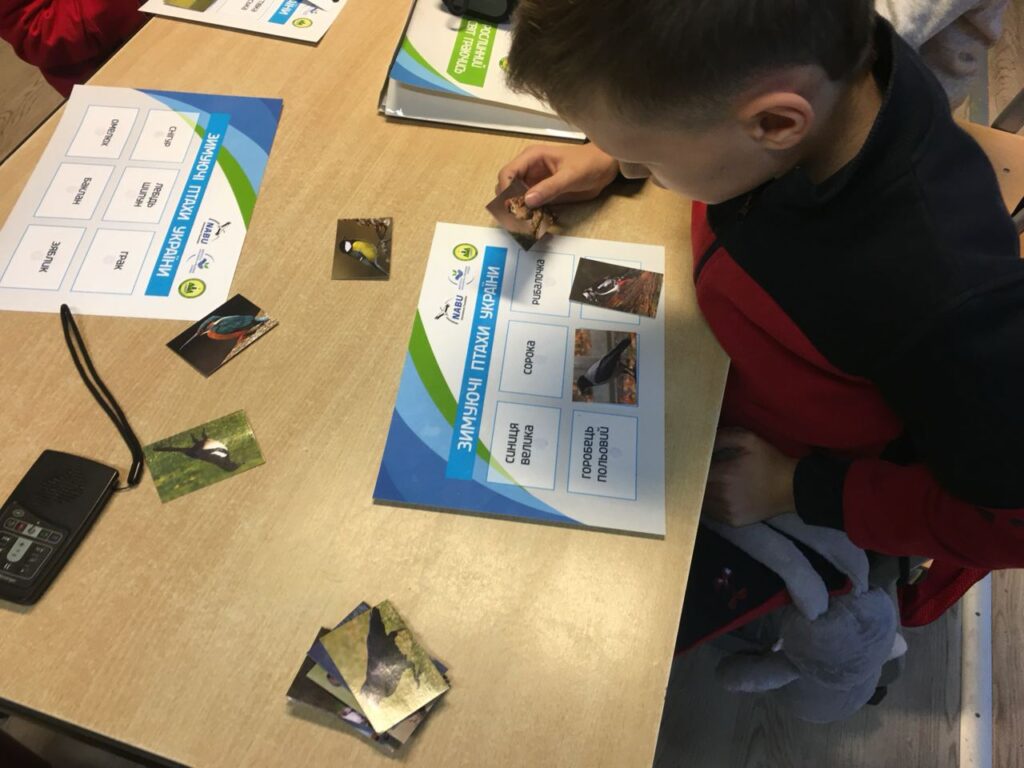
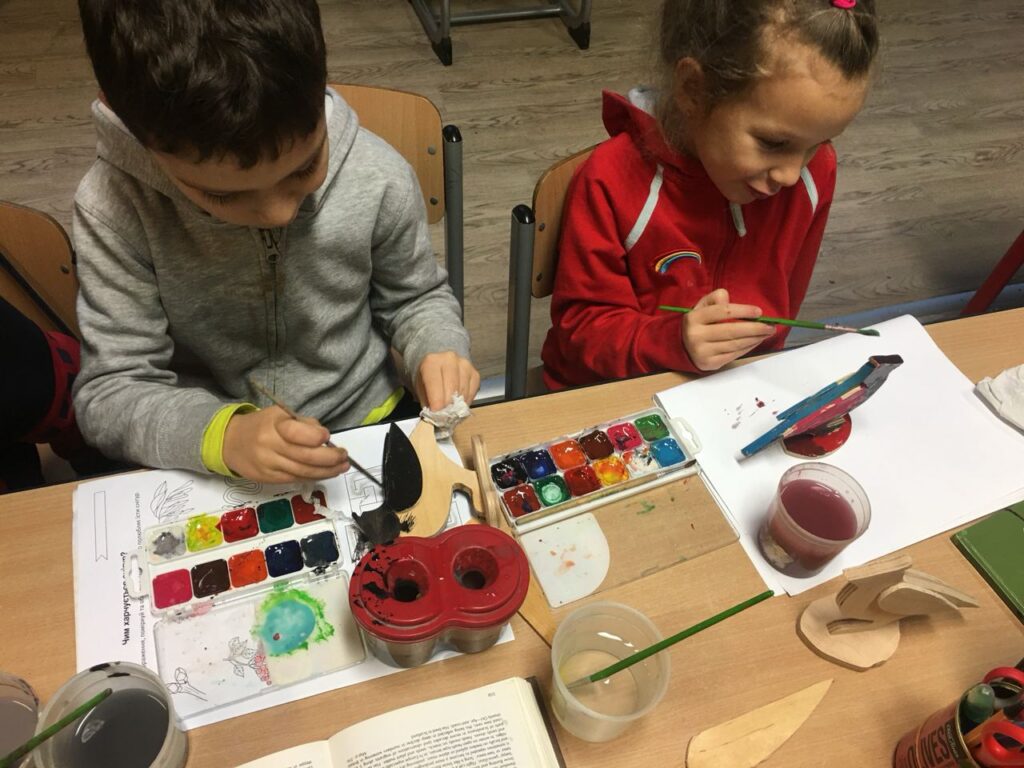
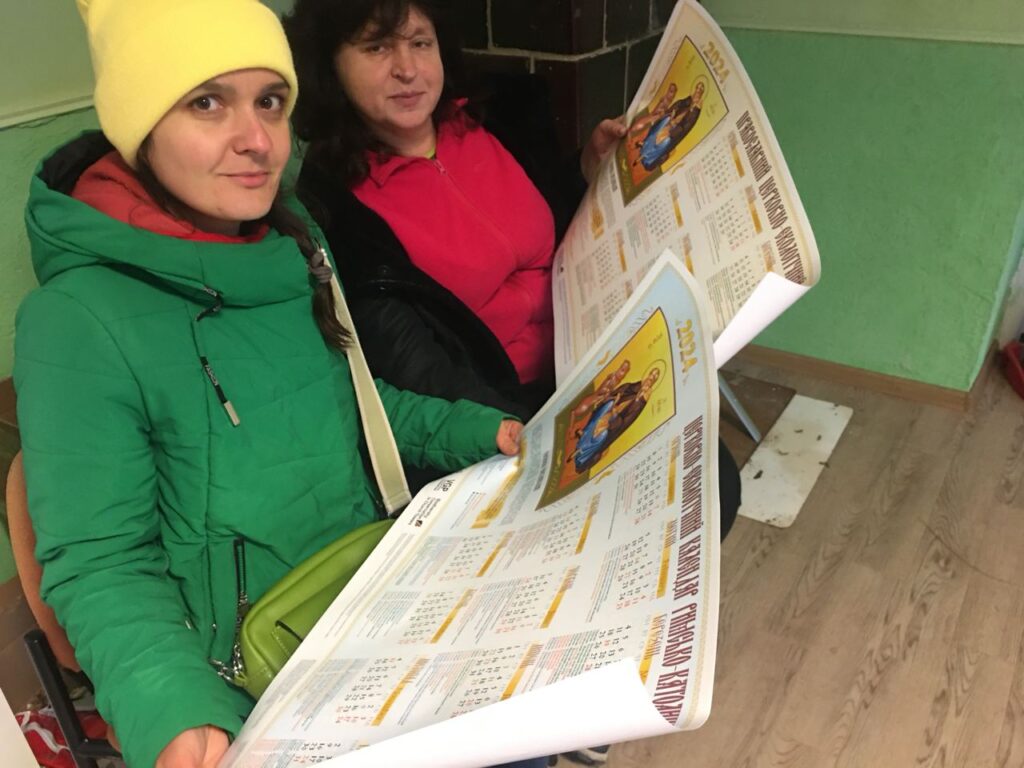
The participants engaged in a didactic game “Learning about flora and fauna by playing” to reinforce their knowledge. After creating wooden bird figures, the children painted them, and their parents received ecological and religious calendars for 2024 as a token of participation in the event.
The event was held within the framework of cooperation between the Interreligious and Civil Environmental Forum of Eastern Europe (IRCEF) headed by Olexander Bokotey) and the German Nature Conservation Union (NABU Bundesverband, NABU International), project coordinators Ivan Tymofeiev (NABU), and Nataliya Kulya (IRCEF).
Informational Service of IRCEF